
Stability Is Biological, Retainers Can’t Do Everything
Orthodontic stability is not “set and forget.”
Retention works best when structure and function are already balanced. Retainers protect alignment. They do not correct skeletal imbalance.
The tongue and facial muscles apply pressure to teeth every day. In many ways, they act as the body’s natural retainer. When those forces are out of balance, teeth can drift and orthodontic results can relapse.
When orthodontic treatment repositions teeth, the surrounding bone must remodel and stabilize around that new position. That remodeling takes time.
Retention works best when structure and function are already balanced. Retainers protect alignment. They do not correct skeletal imbalance.
The Role of Retainers
Retainers hold teeth in position while bone remodeling occurs.
They buy biology time.
Immediately after braces or aligner treatment, retainers are typically worn full time. As stability improves, wear is reduced to nighttime use.
Teeth can shift throughout life. Long-term nighttime retainer wear is often recommended to preserve alignment.
Retention is part of orthodontic treatment, not an optional phase.
Fixed and Removable Retainers
Removable Retainers
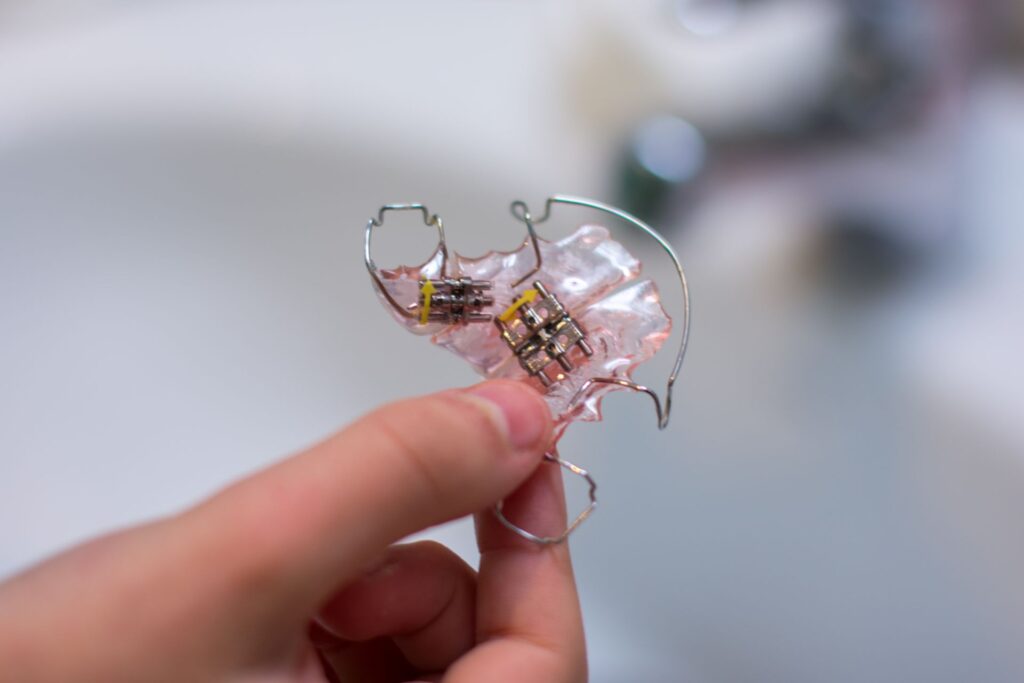
Hawley retainers are clear removable appliances commonly used to maintain tooth alignment. They are easy to clean and allow for normal oral hygiene.
Bonded Retainers
In many cases, a thin wire is bonded behind the lower front teeth to prevent minor relapse in an area that frequently shifts.
Even with bonded retainers, ongoing evaluation is important.
Why Teeth Relapse
Relapse does not happen randomly.
Teeth are more likely to shift when:
- Jaw & palate width are narrow
- The tongue rests low in the mouth
- Mouth breathing persists
- Facial muscles are out of balance
The tongue is the instrument of growth. When it rests properly against the palate and breathing occurs through the nose, it supports the dental arches from within.
When the tongue sits low or the airway is compromised, the mouth often stays open and inward pressure patterns persist. Over time, that can influence alignment.
Nasal Breathing and Long-Term Stability
Nasal breathing supports stability.
When the mouth stays closed and the tongue rests against the palate, the dental arches are supported from within.
When breathing occurs primarily through the mouth, the tongue often rests low. That changes internal pressures and can influence alignment.
Stable breathing patterns support long-term orthodontic stability.
Growth Changes in Children and Teens
Children continue to grow after Phase I and Phase II treatment. As they grow, jaw relationships and airway patterns can change.
We have seen symptoms return when growth outpaces structural correction. Some patients require two or even three phases of treatment to grow into correct function.
Retention during growth helps guide that process.
We continue to monitor development so we can adjust if needed and protect long-term stability.
What Happens If Retainers Are Not Worn
If retainers are not worn as instructed, minor shifting may occur.
Early changes can often be corrected easily. More significant relapse may require additional treatment.
Regular follow-up helps detect small changes before they become larger concerns.
Monitoring Stability Over Time
Periodic evaluations allow us to:
- Assess bite balance
- Evaluate jaw relationships
- Monitor airway and breathing patterns
- Detect early signs of relapse
Our goal is not just straight teeth. It is stable structure and healthy function over time.
Frequently Asked Questions
How long do I need to wear my retainer?
Most patients begin with full-time wear, then transition to nighttime wear. Long-term nighttime wear is common.
Can teeth shift years after treatment?
Yes. Teeth can move throughout life. Retainers protect alignment as the body changes.
Are permanent retainers better?
Both removable and bonded retainers serve specific purposes. Selection depends on the case.
Can breathing patterns affect relapse?
Yes. Tongue posture and nasal breathing influence internal forces within the mouth and can affect long-term stability.
Is retention included in orthodontic treatment?
Retention planning is part of orthodontic care and is discussed during treatment planning.
The Next Step
If you have completed orthodontic treatment or are concerned about shifting teeth, a Comprehensive Airway Evaluation at our Lewiston, Idaho practice is the first step toward understanding whether airway structure is contributing to the problem. We welcome patients from Lewiston, Moscow, Grangeville, and throughout North Central Idaho, as well as from across the United States, Canada, and beyond.